
Transforming the Symphony for a New Generation
Today, most recorded music can be separated into individual tracks using AI, allowing each instrument to be isolated and controlled.
This works well for pop and studio-produced genres — but not for symphony orchestras, where dozens of instruments blend naturally in the same acoustic space. Their overlapping harmonics make true separation nearly impossible, even with advanced AI tools.
To overcome this, Gisle and Respons Records recorded excerpts from ten symphonies using a method developed by Gisle — a radically different approach from traditional classical recording. This technique gives us full, post-recording control of every instrument, something unattainable in a standard orchestral session.
Most importantly, this control is passed on to the user. With MyInteractive, anyone can become the producer: selecting instruments, shaping the mix, adding new layers, or even replacing an orchestral part with their own performance — all from a mobile phone or tablet.
This innovation opens a new world for students, educators, and music enthusiasts, allowing them to step inside the architecture of a symphony and understand how an orchestra works — instrument by instrument, voice by voice.
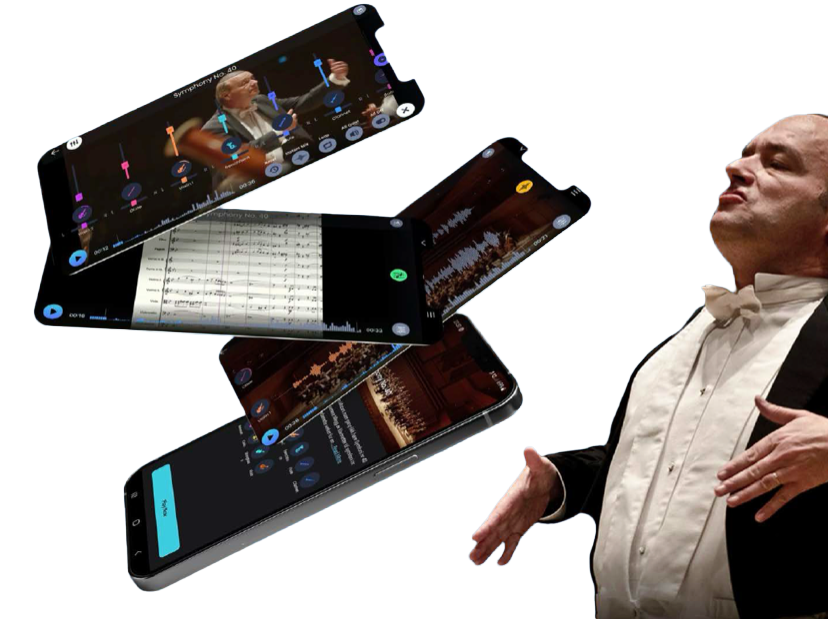
Recording Mozart
Producing Mozart's Symphony No 40 in MyInteractive format with The Stavanger Symphony Orchestra, conducted by Jan Willem de Vriend
Filming the Orchestra

Recording stem by stem. From the recording of the Cello group.

Recording stem by stem. From the recording of the Bassoon group.

The Team:
Gisle, Pytten, Jan Willem & Gaute
